Our Blog
How to Accurately Calculate Carpet Area?
-
 By Atharvlifestyle
 -
 March 9, 2026
 -
 Uncategorized
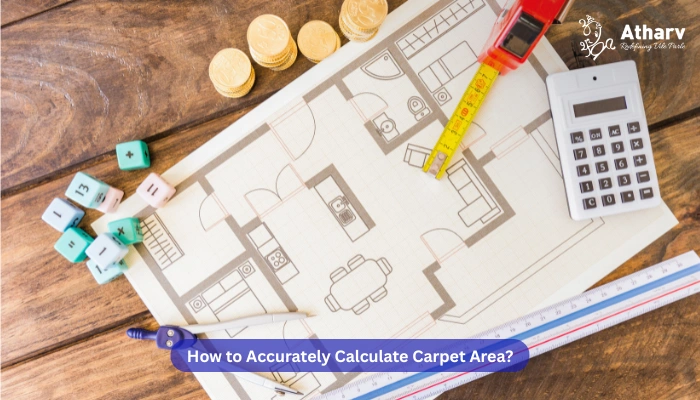
If you’re buying your first home, you’ve probably felt that familiar swirl of confusion at terms like built-up area, super built-up area, and carpet area. We’ve all been there, staring at apartment measurements, wondering what space you’re actually going to live in and whether you’re getting the space you’re paying for. Here’s the thing: learning how to calculate carpet area isn’t just about numbers. It matters for budgeting, planning furniture, figuring out usable space, and comparing properties. And since most Indian builders price homes based on super built-up area, understanding carpet area helps you see past the jargon and make smarter decisions about your investment.
What Exactly is Carpet Area?
You might be wondering, “So what really counts?” The carpet area is the usable floor space in your home where you can actually lay a carpet and move around. Think of it like this: if you bought a rug for your living room, you’d measure the exact floor you can walk on (excluding walls). That’s essentially the idea. The carpet area includes inner spaces such as bedrooms, living rooms, kitchens, and other areas where you reside and move about. What’s excluded? The thickness of interior walls, balconies, shafts, terraces, and common areas. When you know how to calculate carpet area, you’re really discovering how much real living space you’re getting, not just a number on paper.
The Simple Formula for Carpet Area Calculation
Now, let’s make this practical and yes, use some real numbers because that’s easier to wrap your head around.
Here’s a basic step-by-step to calculate carpet area:
- Take room dimensions (length × width) for each room.
- Add them up.
- That total is your carpet area (usually in square feet).
For example, imagine a 2BHK apartment you’re considering:
- Living Room: 12 ft × 10 ft = 120 sq ft
- Bedroom 1: 10 ft × 12 ft = 120 sq ft
- Bedroom 2: 10 ft × 10 ft = 100 sq ft
- Kitchen: 8 ft × 8 ft = 64 sq ft
- Bathroom: 5 ft × 8 ft = 40 sq ft
Add all these up:
120 + 120 + 100 + 64 + 40 = 444 sq ft of carpet area
That means you have 444 sq ft of usable floor area where you can place furniture, move around comfortably, and truly live. That’s how to calculate carpet area straightforwardly. Real builders will give this number in their sales agreement, and it’s often slightly different from your own measurement due to wall placements or columns.
Common Mistakes People Make When Measuring
Here are a few practical errors first-time buyers often stumble over:
- Including Wall Thickness: Carpet area excludes walls. Don’t count them.
- Confusing Balcony and Terrace Space: They’re not part of the carpet area, even if they feel like extra space.
- Skipping Irregular Shapes: If a room isn’t perfectly square, measure in segments to be accurate.
- Relying only on Super built-up Numbers: These include common spaces like lobbies and corridors; they don’t reflect your usable home area.
Avoiding these ensures your expectations match reality.
Carpet Area vs Built-Up Area vs Super Built-Up Area
Here’s a quick comparison to clarify the differences:
| Term | What It Represents |
| Carpet Area | Your actual usable floor area (rooms, kitchen) |
| Built-Up Area | Carpet area + internal walls |
| Super Built-Up Area | Built-up area + proportionate common areas like lifts, lobby, corridors |
So when you’re told an apartment is 1,000 sq ft super built-up, the actual living space (carpet area) might be only 540–620 sq. ft., depending on the project and common area charges. That’s why understanding how to calculate carpet area matters: the number on the brochure isn’t always the number you’ll live with.
Practical Tips for Verifying Carpet Area Before Buying
You don’t have to rely solely on the strategy. Here are hands-on steps to confirm your carpet area:
- Check the RERA Certificate: In India, projects must list carpet area per unit in their RERA filings; this is legally mandated and helps avoid surprises.
- Detailed Floor Plan: Compare room dimensions with what the sales team provides.
- On-site Verification: If possible, visit the unit and take your own tape measure; it’s the best way to grasp real usable space.
- Clarify Exclusions: Ask which areas (like ducts or niches) are excluded from the carpet area.
- Read the Agreement: The sales contract should show how they define and calculate carpet area.
These checks help you confidently understand what you’re paying for, especially since reputable developers like Atharv Lifestyle emphasise transparency and provide precise carpet area numbers with their projects.
Why It Matters For You?
Let’s be honest: knowing how to calculate carpet area gives you a clear picture of what you’re buying. You can plan your furniture, imagine your day-to-day life in the space, and budget wisely. Instead of just comparing two super built-up values, you’re comparing actual livable areas. That’s a game-changer for first-time homebuyers.
Before you finalise, always ask the sales team for the carpet area number and have it reflected in your agreement. And if you want professional guidance on selecting a space with the best usable floor area for your budget, don’t hesitate to contact Atharv Lifestyle; their team can walk you through every measurement and make sure there are no hidden surprises.