
Our Blog
Redeveloping Your Old Building in Vile Parle: A Society’s Step-by-Step Guide
-
 By Atharvlifestyle
 -
 July 23, 2026
 -
 Uncategorized
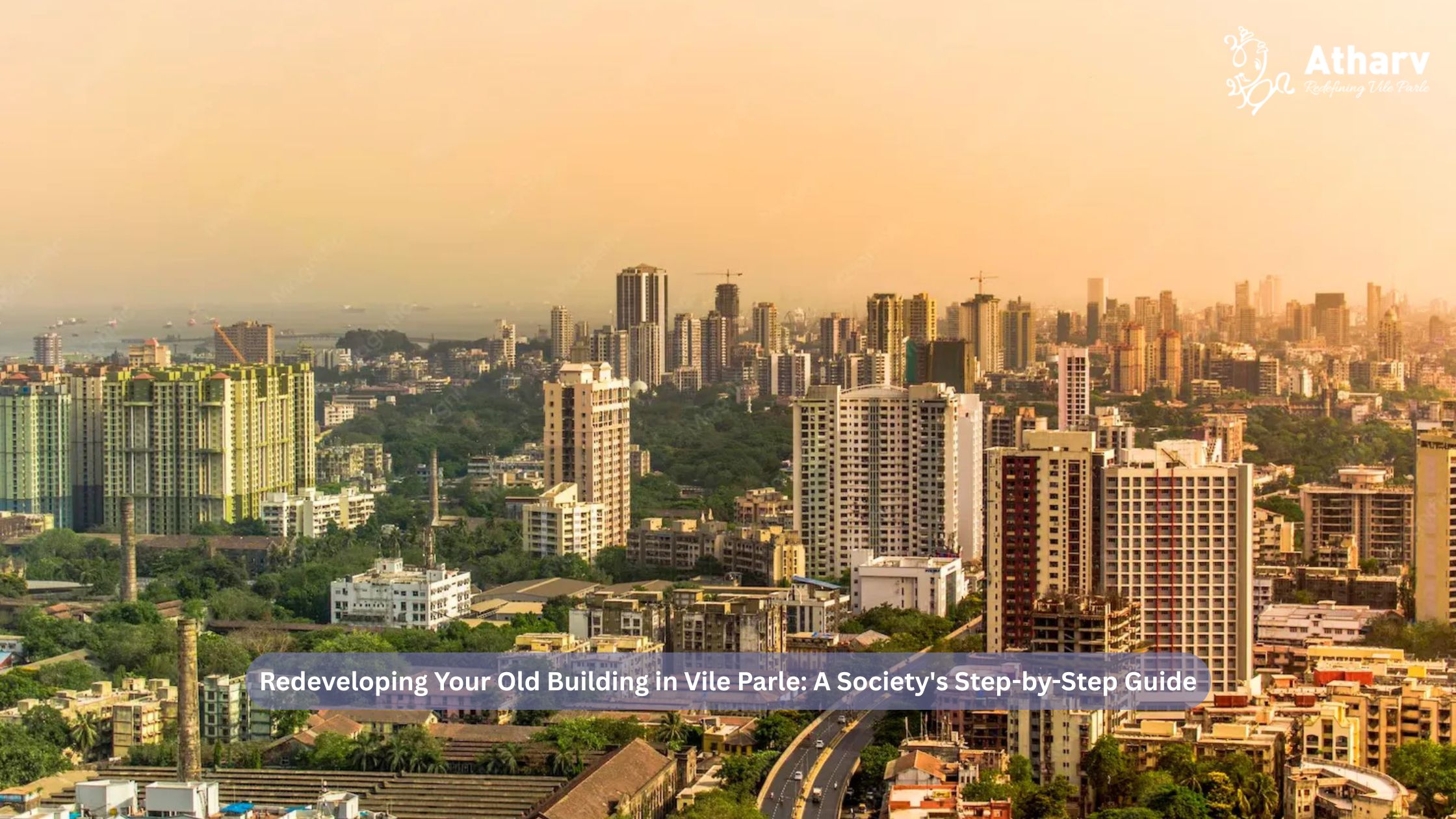
Walk through Vile Parle East today and you’ll notice the same pattern on almost every lane: a cluster of ageing, three- or four-storey buildings from the 1960s and 70s standing right next to a tower that’s barely a few years old. That new tower usually started exactly where you’re standing as a housing society that decided its building had reached the end of its useful life and chose to redevelop rather than repair. If your own society is weighing that decision, here’s a practical look at how the process actually unfolds.
Step 1: Get a Structural Audit Done
Before any conversation about developers or design begins, get an independent structural audit from a licensed structural engineer or the local municipal panel. This tells you objectively whether your building needs major repairs, can be retrofitted, or has genuinely reached the point where redevelopment is the only sound long-term option and it’s the document that will later support your case with the municipal corporation and, if needed, MHADA.
Step 2: Build Society Consensus and Appoint a PMC
Redevelopment can’t move forward without the required majority of members agreeing to it, so this step is as much about communication as paperwork. Most experienced societies bring in a Project Management Consultant (PMC) here an independent professional who represents the society’s interests, prepares the tender documents, and evaluates developer proposals on the members’ behalf rather than the developer’s.
Step 3: Shortlist and Select the Right Developer
This is the step where most redevelopment outcomes are decided, long before construction begins. When you’re evaluating builders in Vile Parle, look past the initial offer and check their delivery track record, financial strength to fund construction independently of pre-sales, local experience navigating Vile Parle’s approvals process, and any industry recognition that backs up the sales pitch.
Atharv Lifestyle is a useful reference point here. Its redevelopment journey in Vile Parle began in 2013, and it has since delivered 16-plus projects and over five lakh square feet of housing to more than a thousand families in the neighbourhood work recognised with the Excellence in Luxury Homes award at the Times Redevelopment Awards 2024. Atharv Casa, for instance, began as the redevelopment of Shanti Sadan Society in Vile Parle East and is now a modern residential address in its own right. It’s the kind of case study worth asking any shortlisted developer to match not necessarily in scale, but in delivery discipline.
Step 4: Sign the Development Agreement and Secure Approvals
Once a developer is finalized, the society and developer sign a Development Agreement along with a Power of Attorney, both of which should be reviewed by the society’s own lawyer, independent of the developer’s legal team. The developer then applies for the Intimation of Disapproval (IOD), Commencement Certificate (CC), and RERA registration for the new project all of which your PMC or society lawyer should verify before construction begins.
Step 5: Plan the Transit Period Rent and Corpus
Members typically vacate the old building during construction, and the Development Agreement should clearly spell out two things: a monthly transit rent, paid until possession of the new flat, and a one-time corpus fund as compensation for the disruption. Get both figures, along with escalation clauses and penalty terms for delays, documented in writing before you vacate.
Step 6: Monitor Construction Quality
Redevelopment isn’t a sign-and-forget process. Societies that stay engaged through periodic site visits, PMC progress reports, and RERA-mandated quality checks tend to end up with better-finished homes than those that don’t.
Step 7: Handover and Occupation Certificate
Possession should only happen after the developer secures the Occupation Certificate (OC) from the municipal corporation never before. Once the OC is in hand, your society moves from a redevelopment project to owning genuinely new flats in Vile Parle, typically with modern amenities, better parking ratios, and stronger structural compliance than the building you started with.
Why This Cycle Keeps Reshaping Vile Parle
Audit, consensus, developer selection, approvals, construction, handover this cycle is quietly responsible for most of the fresh housing supply in the neighbourhood today. It’s why the list of upcoming residential projects in Vile Parle East keeps growing even though there’s very little vacant land left to build on.
Atharv Lifestyle: A Redevelopment Partner in Vile Parle
It’s also worth noting how far a redevelopment-led developer can scale once it earns a neighbourhood’s trust. Atharv Lifestyle’s own growth traces exactly that arc from redeveloping individual Vile Parle societies into projects like Atharv Casa, Atharv Aryston, and Atharv Chandra Milan, to now building landmark addresses like Shivalaya Atharv at Shivaji Park in Dadar and Atharv Brindavan in Andheri East. For a society about to start this journey, that’s a reassuring sign: the right developer relationship in Vile Parle doesn’t just deliver one better building it can be the start of a much longer track record.